Small housing authorities
A direct, understandable workflow when a few people carry many responsibilities.
 Landmark Inspection Services, LLC855-987-5400
NSPIRE inspections · Housing programs
For Public Housing and HCV leaders, Landmark connects field observations to clear records, disciplined review, and practical follow-through.
A disciplined starting point
Program name alone does not define an engagement. Property type, governing requirements, sampling, access, deliverables, review responsibilities, and follow-up expectations must be confirmed for the specific assignment.
Continuity through changing standards
Landmark’s controlled records include HQS-era proposals from 2015, combined HQS and UPCS inspection proposals from 2018, and NSPIRE inspection work records beginning in 2024. That record spans the transition from earlier federal protocols to today’s NSPIRE requirements.
That continuity informs how Landmark approaches change: clarify the governing requirements, align field procedures, identify staff-learning needs, preserve usable documentation, coordinate data and software steps, and keep quality review connected to follow-through.
NSPIRE implementation is more than a new checklist. It affects people, properties, records, software, maintenance follow-through, and the daily work of keeping a housing program moving.
Multiple inspectable contexts
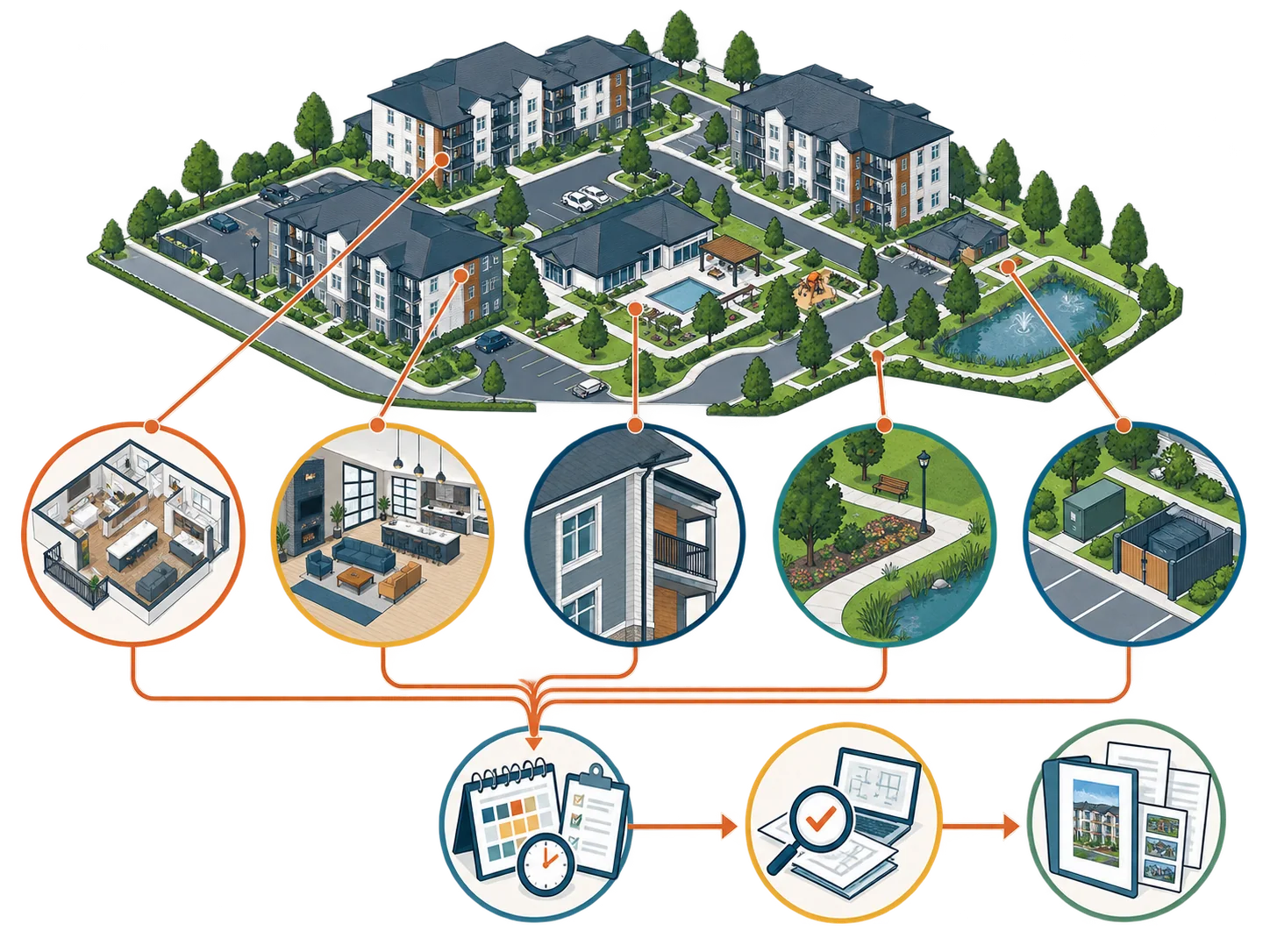
Units, shared interiors, building exteriors, site areas, and support spaces require clear location and scope.
Built around the people responsible
Landmark frames the work around the decisions each person must make—without losing the common inspection record underneath it.
A direct, understandable workflow when a few people carry many responsibilities.
Consistent records and review that can move across properties, teams, and schedules.
Traceable documentation that supports program oversight without flattening property-level context.
Findings organized so location, priority, correction responsibility, and verification stay connected.
Clarify the property, program context, inspection purpose, stakeholders, timing, and required outputs before a commitment is made.
Structure observations so location, condition, context, and supporting records remain understandable beyond the site visit.
Review completeness and internal consistency before records move into reporting and follow-through.
Organize open findings, reporting needs, and accountable next steps around the agreed scope.
Field evidence at property scale
Selected Landmark photographs connect the building and site to mechanical support areas and unit interiors—the different contexts housing leaders and maintenance teams need to understand.
Useful preparation
Share the program, portfolio, or property question. Landmark will confirm whether a responsible scope discussion is appropriate.